Thursday, October 19, 2017

We the People (and other highlights)


Of course our 139th Annual Meeting was chock full of quality, informative and entertaining CLE’s.  That goes without saying.  We are so fortunate to have a dedicated and knowledgeable volunteer pool of members to choose from when organizing our annual meetings.  So first stop, in this post-meeting blog, is to give a HUGE thank you to all of our volunteer presenters that helped make our meeting a success.  But wait, there’s more!

New on the agenda this year, was a 2-hour ethics seminar using movie clips to highlight the best, but more often than not, the worst, legal ethical violations on screen (and hopefully just on screen!).  Larry Cohen delivered a hilarious and enlightening presentation, while members were treated to popcorn and a cash bar throughout.  The most surprising moment?  When we suggested a break at the half-way point so folks could stretch and refresh at the bar and the majority vote was to keep going! Members were thoroughly engaged—the presentation was a real treat.

Another notable event?  The luncheon business meeting!  No, that wasn’t a typo.  Yes, the required business meeting can be dry at times, and long, but, alas, it is the members’ annual business meeting containing many mandatory elements.  To kick off the meeting, we were treated to a speech from Governor Scott who commended the essential and beneficial work of lawyers in the State on many planes.  Also, this year during the meeting, Chief Justice Reiber led the entire membership through a restatement of the Oath of Admission.  Hearing all of us recite the oath in unison was inspiring and reinvigorated a sense of loyalty and a common duty of service.  For further motivation, we heard from the VBF and Access to Justice Campaign as well as from the Attorney General about the food drive results.

Most would agree that the top feature of the luncheon meeting was the karaoke treat by outgoing President Mike Kennedy.   As promised in his blog, if a person or firm gave $1,000 to the Access to Justice Campaign, he would perform a song at the Annual Meeting.  And perform he did!  President Kennedy recited a statistic indicating that only 40% of polled Americans knew even ONE of the protections afforded in the First Amendment.  So, facing laughter, tears, surprise, awe, a chorus of members and applause, Mike sang the preamble to the Constitution from the Schoolhouse Rock series.  The video clips won’t be in this blog, but hope to post video to our website.  It was incredible, with the whole crowd joining in!  After a performance like that, we can understand why incoming President Dan Maguire scrapped his speech and had to just give props to Mike.  What’s on the agenda next year, Dan?

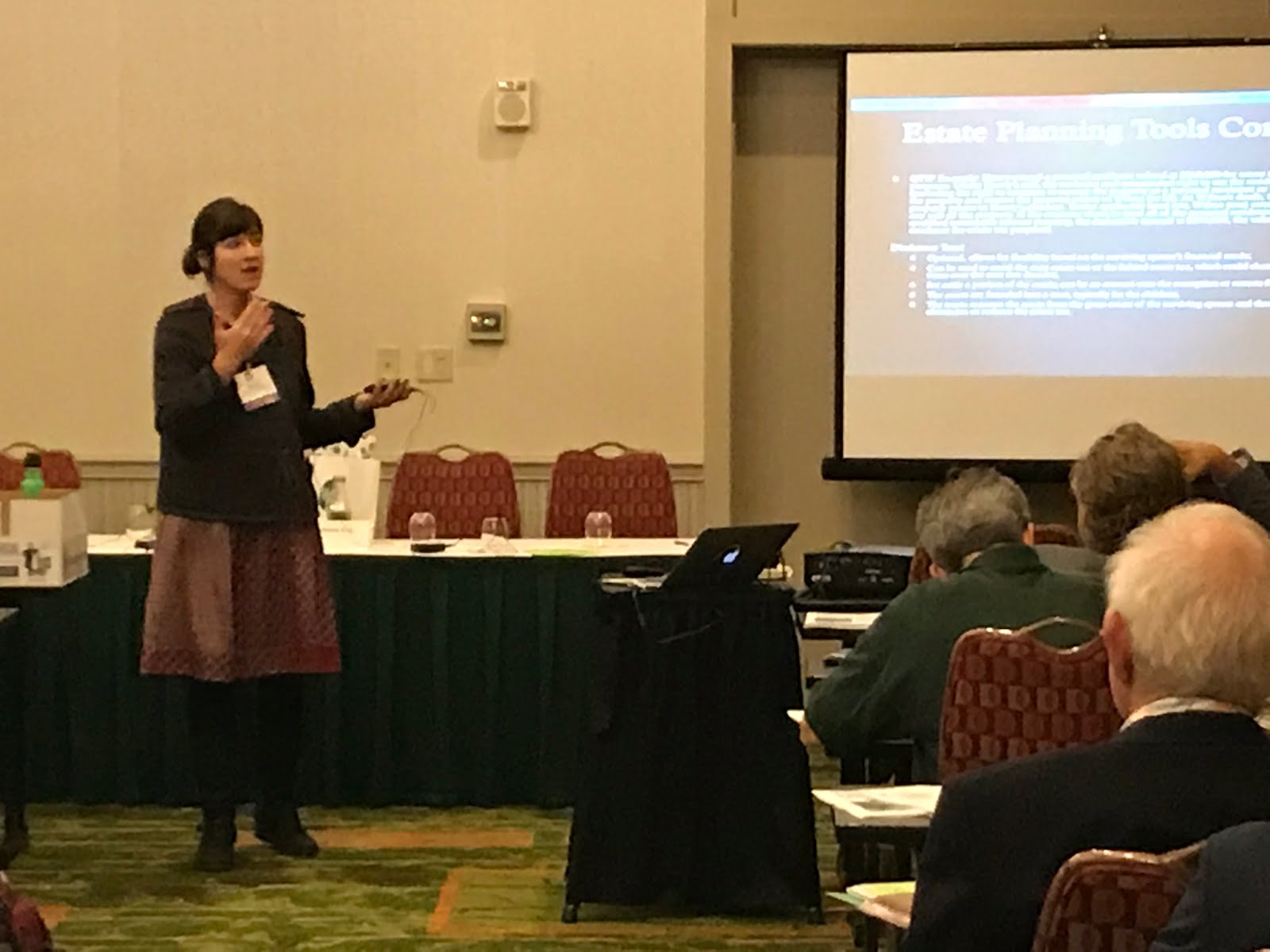
Throughout the 2-day event, members networked, laughed and brainstormed cases.  It is always fun to watch members connect, or re-connect at our large gatherings.  The seminar rooms were all well-attended and the questions were flowing.  The pictures from the event are below, including glimpses in each room, from wellness to real estate, from employment law to cemeteries, from bias to Casemaker, from probate to Act 250 and from evidence to pro bono, among others.  

Hopefully our attendees still had time to visit our exhibitors and sponsors offering products and services to help attorneys streamline their practices.  We had an amazing batch of sponsors and exhibitors this year, so special thanks to them as well!  


As we wind down from an amazing event, don’t forget Real Estate Law Day on November 15th, ESOPS on December 6th and our Mid-Year Meeting on March 22nd-23rd.  We encourage our members in attendance to complete the survey as we strive to constantly improve our service to our members.  Also, even if you weren’t in attendance, please feel free to drop me a line with any CLE suggestions or suggestions for the VBA.  We are here and we are always listening.  Enjoy the event pictures, below and see you next time!


Ethics AND popcorn? Score!
Anyone? Anyone?
Ready to pass the gavel!
Can't beat the view!

Exhibitors Ready for the Stampede!
 
I, State Your Name,...
"...Provide for the Common Defense..."
Encore!!

No, you just HAND it to him...
Like this

And, last but not least, congratulations to Kim McManus for winning our Exhibitor Scavenger Hunt!


Wednesday, October 4, 2017

Clio is Coming!


Clio is coming. 


Ok.  It’s been here, but we will have a live rep at our annual meeting next week.  Come and meet her. She’s fabulous!

What is Clio?  You may already know that they are one of our many affinity partners who offer a discount for VBA members.  But we are still being asked what IS Clio?

On Clio’s website, they have an unassuming, literal slogan.  “Clio helps lawyers build a better practice.” From what we’ve seen from Clio and what we’ve heard from users, this is absolutely true.
Clio has grown quite quickly to become the most widely used practice management software in the world.  They have 150,000 users all over the world.  They strive to be and claim to be the most comprehensive, easy-to-use, cloud-based law practice management software available. 

Studies have shown that law practice management software, generally, allows firms to have 40% less support staff and consistently more revenue per attorney.  Law Practice management includes things like: case or matter management, document management, centralized collaboration, time and billing software, scheduling, conflict check ability and remote access.  A recent survey of Clio users found that Clio saves lawyers an average of 1-2 hours per day! How does it save time?  Clio will reduce time spent billing and tracking time, hunting for files or finding information and preparing duplicative documentation.  It increases productivity and reduces outstanding invoices.

To see more, Clio invites you to watch their demo video: Meet Clio: The Easiest Way to Manage Your Firm.   Matters and billing can be seen all in one screen.  Template documents can be auto-filled with each client’s information.  Clio will track time and generate time and billing reports and trust ledgers.  The #newclio release ensures seamless integration with Outlook 365 (For tracking and sorting time and content from emails) and LawPay (for receipt of payments 35% faster than checks). 
By now you may be thinking, ‘Clio Clio Clio,’ why all this Clio, why now?  One reason is that folks from the VBA just attended the Clio conference with 1,200 of our closest friends.  The conference and presentations were well-designed, thoughtful, inspiring and fun.  Their employee policy ensures a devoted and energetic staff.   The second reason is the unveiling of their 2017 Legal Trends Report resulting from data and 60,000 user responses which found, among other things, that lawyers only produce 2.3 hours of billable work a day on average! Over half of most attorneys’ time is spent on administrative matters.

Finally, Clio has a sharp focus on the “flywheel” business model based upon consumer demand which has made service disruptors like Uber, Airbnb and Amazon so successful.  Clients, as consumers, just want an effortless experience.  Law firms need to learn to be obsessively client-focused.  In that vein, Clio offers full integration with over 70 integration partners and also has unveiled a new API that allows anyone to build tools and products to add on to Clio.  All of these applications work toward improving client satisfaction, which generates the flywheel’s perpetual power.

Some of the applications that integrate with Clio include: Apptoto (automated appointment and hearing reminders for clients via SMS, voice or emails using Clio’s calendar); zipwhip (sends and receives text messages to clients from firm’s existing business phone number); TrustBooks (offers triple reconciliation and makes IOLTA accounting simple); Vijilent (creates data portraits using AI to compile social media data on anyone); Trustifi (provides encryption and secure delivery and tracking of email);  Logikcull (automates eDiscovery and data management in litigation); Tali (a voice-driven, AI powered time tracker) to name a few.  And currently in the works, Clio is developing a communication module like a WhatsApp for lawyers.  Not familiar with WhatsApp?  Ask your world-traveling niece or nephew!

As one Vermont user put it: “I’d safely say that we have increased our productivity by one-third since we started using Clio.  And my income is up 20% now as a solo from what it was with two other lawyers.”  And “There is nothing else on the market with the power and depth of Clio. It comes close to committing malpractice if you are not using it, since, ethically, we should be using many of its features, but I don’t know of any other platform that does it all in one package.”

With so many ways to increase productivity, Clio allows lawyers to achieve a better work-life balance. 


It’s a great time to be a lawyer!


Thursday, September 21, 2017

Constitution Day 2017!


For the second year, the VBA has honored Constitution Day by hosting a panel presentation on the US Constitution, this year at the Vermont Supreme Court.  The presentation carried forward the ABA Law Day 2017 subject: The 14th Amendment.  We were extremely fortunate, and are equally grateful, to have hosted a stellar cast of presenters:  Justices Harold Eaton and Karen Carroll and Judges Robert Mello, Mary Miles Teachout and Timothy Tomasi.  The event was moderated by VBA President Mike Kennedy and hosted by the VBA, complete with delicious refreshments made by our Executive Director, Teri Corsones.  Special thanks also to the Judiciary for the use of the courtroom at the Supreme Court.

President Kennedy cited a statistic that approximately 40% of Americans cannot name one thing that a government “shall not” do, that would hinder protections afforded by the First Amendment.  Too many people are not aware of the importance of the rule of law and the essential role the Constitution plays in our daily lives.  Constitution Day is often celebrated on September 17th, the day of its signing. Many bars highlight the Constitution during events in the entire month of September.  As we noted after last year’s Constitution presentation, Constitution Day should be every day!

Judge Mello kicked off the event with an engaging, stage-setting story of the birth of the Constitution and the ratification of the Bill of Rights and other key amendments, noting the length and complexity of the 14th Amendment.  Next, Justice Eaton gave a thorough primer on the Due Process Clause of the 14th Amendment and highlighted some relevant cases.  Justice Carroll then ran through the emergence of the Equal Protection clause and its application, highlighting the Plessy vs. Ferguson “separate but equal” cases, to the Brown vs. Board of Education cases eradicating that premise, and finishing with same-sex marriage and other contemporary equal protection cases.  Judge Tomasi spoke of substantive due process, calling the Due Process Clause the “Windex” of the Constitution, noting how it is applicable to nearly every situation, and provides an overriding remedy, much like Windex is touted in the movie My Big Fat Greek Wedding.  Finally, Judge Teachout tied the presentations together, giving countless examples of the relevance of the Constitution in everyday case law and circumstances.

A link to the video will be available on our website soon, which will be viewable by the public.  Last year’s presentation, a general overview of the Constitution, is also available on our website.  The VBA is also pleased to offer pocket Constitutions, along with these videos or written templates, to any lawyer or judge who would like to present to a school or civic group about the Constitution.  Last year, many members mobilized to bring presentations to schools around the state, and the reports were quite uplifting.


Please keep the momentum going and take an hour of your time to educate our youth and the public about this amazing, surprisingly short, complex, relevant and effective document governing all of our civil rights and establishing the rule of law.  You will be spreading wisdom and pride, and you will undoubtedly feel (more) wise and proud for it!

Contact info at vtbar dot org for pocket constitutions and templates.

Thursday, August 31, 2017

A Little Bit of History


August 30th marks the 50th anniversary of the appointment of Thurgood Marshall, the first African American to be appointed to the US Supreme Court.   Thurgood Marshall stayed on the bench for 24 years before retiring for health reasons.  An admirer of the Constitution as a youth, he applied to attend the University of Maryland School of Law but was denied based on their segregation policy.  He instead went to Howard University Law School and graduated magna cum laude. He spent his legal career as a leading advocate of individual rights, culminating with his victory as litigator in the Brown vs. Board of Education case.  He in fact won 29 of the 32 cases he had brought before the Supreme Court during his career.  He was also later victorious in his suit against the University of Maryland for their unfair admissions policy.

As I read the Thurgood Marshall article, a little bit of Vermont’s history stared back at me from its Ziploc baggie on my desk.  For those of you not following our Facebook, Twitter and Instagram posts, you may not know that some very kind folks at Dartmouth College mailed to us what appears to be an original pamphlet from 1806 entitled “General Regulations for the Gentlemen of the Bar in the State of Vermont.” While we at the VBA all found some humor in the fact that it was meant for only the “gentlemen” of the bar, we considered ourselves fortunate that we have not known a time when women were not allowed admission at all. 

After researching the handling of archives, I went with the washed hands, rather than the white cotton gloves, approach.  Triple washed, and not as clumsy as white gloves, my hands trembled as I struggled to remember not to lick my finger to help separate the pages.  Rather than handle it for a lengthy period of time, it was scanned and immediately returned to the baggie and safe.

So what ARE the general regulations?  The anticipation was admittedly greater than the reveal.  Curiously, the pamphlet included a reference only to Dartmouth College as the place to study to have “suitable proficiency in the knowledge of the law.” The main mechanism for being admitted to the bar was rather, after receiving a degree in the arts, studying for three years in the office of a “respectable” member of the bar.  The candidate, after studying three years with the admitted attorney, or five years without an arts degree, would be admitted after recommendation and favorable votes by two-thirds of the “county society” of admitted attorneys present.

The best line regarding the clerkship is this: “No member of the bar shall receive as a reward for the tuition of a student at law in his office any sum less than two hundred and fifty dollars for the time required by these regulations for admission to practice, and in that proportion for a shorter time.”  So the clerkship was not always 100% volunteer work: the ‘respectable’ member of the bar must receive at least $250 for three to five years of supervision of a student!  What a deal!  The greater benefit to the ‘respectable’ admitted attorney of course was that no student was allowed to profit from the office or receive benefits from the profession of the law, nor be allowed to pursue any other employment. 

The pamphlet goes on to state that no sponsoring attorney could have more than two students in his office at any one time and each student had to be approved by the county society.  With the student having to come up with funds to pay the ‘respectable’ attorney for the 3 years or apprenticeship and also being forbidden from receiving any compensation, it is presumed that the practicing attorneys in Vermont in the early 1800’s were undoubtedly from the upper crust of society.  The barriers to admission were robust. 

Certainly, the debate rages on today regarding the socio-economic barriers to admission to the practice of law.  Law school tuitions are being touted as excessive and, particularly in Vermont, not on par with the potential future remuneration in many practice areas.  Still, the involuntary servitude of law clerks memorialized in this pamphlet is no longer mandatory.  And law schools, like VLS, are looking at accelerated and joint degree programs.

Today, with the continued hard-look at removing arbitrary barriers to admission and the focus on universal test scores, those gifted in logic and critical thinking can and will find a path toward helping others in one of the most rewarding time-honored intellectually fulfilling professions.  As a bonus, in Vermont, there are countless ‘respectable’ attorneys in our collegial bar willing to lend a hand or mentor new attorneys for even less than the $83.33/year!  If you are new and have a question, post to the VBA Connect online communities or give one of your colleagues a call.  Mentorship is alive in Vermont, just without the formalities.


If you would like a scanned copy of the 1806 “General Regulations” pamphlet drop me a line at jeb at vtbar dot org.

Thursday, August 10, 2017

Summer in Full Bloom!


Montpelier continues to deliver.  The annuals at the capital and the gigantic hydrangeas are decked out at the capitol building.  Take a stroll, you won’t be disappointed.  Enjoy Vermont’s beautiful but fleeting summer as winter will be here before we know it! 


And save the date for our Annual Meeting October 12th and 13th at the Hilton, Burlington.  Our Thursday evening ethics in the movies (with popcorn, snacks and a cash bar) is sure to please. And the substantive offerings on Friday will entertain you, educate you and fulfill your CLE needs.  See you strolling around!


Friday, August 4, 2017

Beyond Where the Sidewalk Ends...


While walking today, I came to the place where the sidewalk ends.  Literally. Somehow, I expected it to be a bit more magical and welcoming.  But perhaps I was looking at it from the perspective of a jaded, tired adult, and not as Shel Silverstein imagined it through the eyes of children.  A child would probably see the beautiful green hillside as a place for non-conformity and unrestricted play.  I saw defeat.  And poison ivy.

This got me thinking about this week’s blog. At our board meeting last week, we spoke of reinvigorating the work of The Vermont Joint Commission on the Future of Legal Services.  We spoke of the declining, aging membership and the changing provision of services, which got me thinking again about disruptors in the profession, like LegalZoom and Rocket Lawyer, online education providers and the access to justice gap.  The discussion always seems to turn to doomsday or ‘the end’ and the overwhelming adversities that we must face, and fight. We have to be reminded, however, that with change and competition comes opportunity.  The end is another beginning. Maybe we just need a little more imagination!

I recently read in the blog “Associate’s Mind” one young lawyer’s perspective about how important bar associations are to build relationships in person, and on-line.  Bar associations are still critical for networking, allowing attorneys to meet for the first time or get to know better lawyers who are or had once been adversaries in a case.  The live events and online communities allow people to connect and bond outside of the confines of a particularly adversarial case.  Without a neutral platform for building relationships, smart and possibly ego-driven advocates, could remain permanently entrenched. They could miss the opportunity to connect and perhaps look back and laugh.   We are here for each other, now as ever before.  The VBA helps with these bonding opportunities, but also strives to improve the public perception of lawyers, educate and advocate for positive change in the legislature, among other things.

Many bar associations around the country are issuing futures reports to discuss the changes in the legal profession and how associations can better help attorneys embrace change, rather than resort to fight or flight. Our association, like the others, exists solely to help lawyers help others.  Our mission is to serve the public and the profession, cherishing the spirit of congeniality within the legal community.  We recognize the strength, diversity and imagination, rich within our membership.  And we need you, as you need us, as we all strive to find new ways to improve the profession as a rewarding and fulfilling way to help people wade through the complexities of life.


The VBA will soon be entering into some working-group and implementation phase projects stemming from our futures report.  We will be forming working committees to design and implement some of the recommended changes with respect to our court system, technology, education and the provision of legal services.  It’s time to be creative and use our collective wisdom and imagination to help each other remain successful and fulfilled while closing the access to justice gap.  Who is in?  If you have some ideas with respect to implementation or if you’d like to serve on a phase 2 committee, please drop me a line at jeb at vtbar dot org!